Gastroesophageal Reflux – GER and GERD
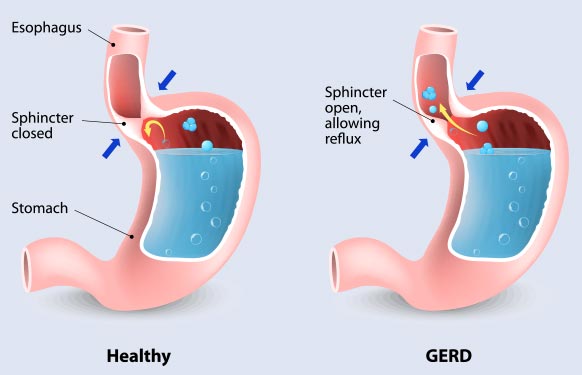
Infants with congenital heart defects may also develop problems with gastroesophageal reflux or GER in which acidic stomach contents can reflux back into the esophagus. This happens when the lower esophageal sphincter or LES, a circular band of muscle that separates the stomach from the esophagus, relaxes when it should stay closed. GER is the most common cause of vomiting during infancy. In healthy infants without any medical problems, these episodes of reflux may occur as much as 73 times per day and almost always completely resolve by 2 years of age. 2
In rare circumstances, GER may progress to troublesome gastroesophageal reflux disease or GERD, which occurs in only 5-8% of infants in general. 3,4
GERD, when severe, can lead to esophagitis or inflammation of the esophagus, and the infant may have behavioral changes such as irritability and disturbed sleep, arching, gagging, and may even refuse to eat. GERD also shares a number of symptoms experienced by infants with congenital heart disease such as weight loss and failure to thrive due to vomiting or poor intake of calories, as well as chronic respiratory or breathing symptoms such as cough, asthma or recurrent lung infections such as pneumonia.
Link Between GERD and Congenital Heart Disease
Congenital heart disease may predispose an infant to developing GERD because of the poor absorption of nutrients from the gastrointestinal tract that occurs with poor heart function, which often accompanies large defects. This deficiency in nutrient absorption can delay emptying of the stomach, which increases the likelihood of reflux. 5
Because of the overlap in some of the symptoms between congenital heart disease and GERD, and because GERD is not common in infancy, a diagnosis of GERD in an infant with a heart defect may often be overlooked.
Managing GERD
Lifestyle Changes
Certain lifestyle changes have been shown to improve symptoms of GERD. In a study of 50 infants with troublesome GERD, a two week trial of lifestyle changes found that by combining a milk-free diet, thickening feeds, anti-reflux positioning and avoiding tobacco smoke, symptoms significantly improved in 60% and resolved in nearly 25% of infants. 6
-
Decreasing exposure to tobacco smoke. Though it is not known how much tobacco smoke contributes to GERD, nicotine is known to lower the lower esophageal sphincter pressure making it more likely to relax, causing reflux.
-
Breastfeeding is encouraged because it may protect against regurgitation. 6 Smaller, frequent feedings, every 2 hours, 8-12 times a day may be the best approach for decreasing regurgitation. By expressing or pumping breast milk, the stress of a demanding feeding schedule can be shared between parents.
-
Milk-free diet. Removing all cow’s milk from the baby’s diet and, if breastfeeding, removing cow’s milk protein and beef from the mother’s diet may improve GERD symptoms, which may be due to the infant’s intolerance of certain proteins. Formula fed infants should be given a “hypoallergenic” formula.
-
Thickening feeds – Adding oat infant cereal to either expressed breast milk or formula, up to one tablespoon per ounce of formula, appears to improve some of the symptoms of reflux. Rice cereal is no longer recommended because of possible contamination with arsenic. 7
However, in 2012, the Federal Food and Drug Administration or FDA issued a warning about thickening agents, because of reports that thickening formulas caused coughing and agents such as xanthan gum led to serious gastrointestinal problems in both premature and full-term infants. 8 Therefore, the decision to thicken your baby’s feeds should be discussed with your physician.
-
Positioning. Keeping an infant upright on a parent’s shoulder (not sitting or propped up in a seat) for up to 30 minutes after feeding seems to decrease the frequency of regurgitation.
All infants younger than 12 months should sleep on their backs (supine), even if they have reflux, because sleeping on their stomachs (prone) increases the risk of sudden infant death syndrome (SIDS). However, if reflux is severe, parents should discuss weighing the risks of reflux against the risk of SIDS with their physician.
-
Acid suppressing medications are recommended only for severe cases of reflux, usually if there is evidence of esophagitis. Short-term trials of medications may be considered for infants with persistent symptoms such as poor weight gain, refusing to eat and irritability despite lifestyle changes.
-
Surgery is rarely necessary and reserved only for severe cases of acid reflux.